Clínica Evest — Management System
A custom management system for Clínica Evest: patients, treatment protocols, appointment scheduling, batch- and expiry-aware inventory, finances and an AI assistant. I owned it end to end, from requirements gathering to the production deployment on AWS, and I'm still responsible for its evolution and support.

Role
Full-stack developer — product, backend, frontend and infra
Period
Apr 2026 — present
Status
In production since Nov 2026, actively evolving
31
database entities
21
API modules
32
e2e test suites
600+
commits across 2 repos
The challenge
The clinic tracked appointments, treatment plans, inventory and cash flow in spreadsheets. Patient follow-ups slipped through the cracks, products expired on the shelf, and closing the month meant checking everything by hand.
The system was built together with the team: meetings with the clinic, a proposal, staff training and frequent releases driven by real day-to-day use. Every production release bumps the version and shows up on a What's New screen inside the app.
Screens
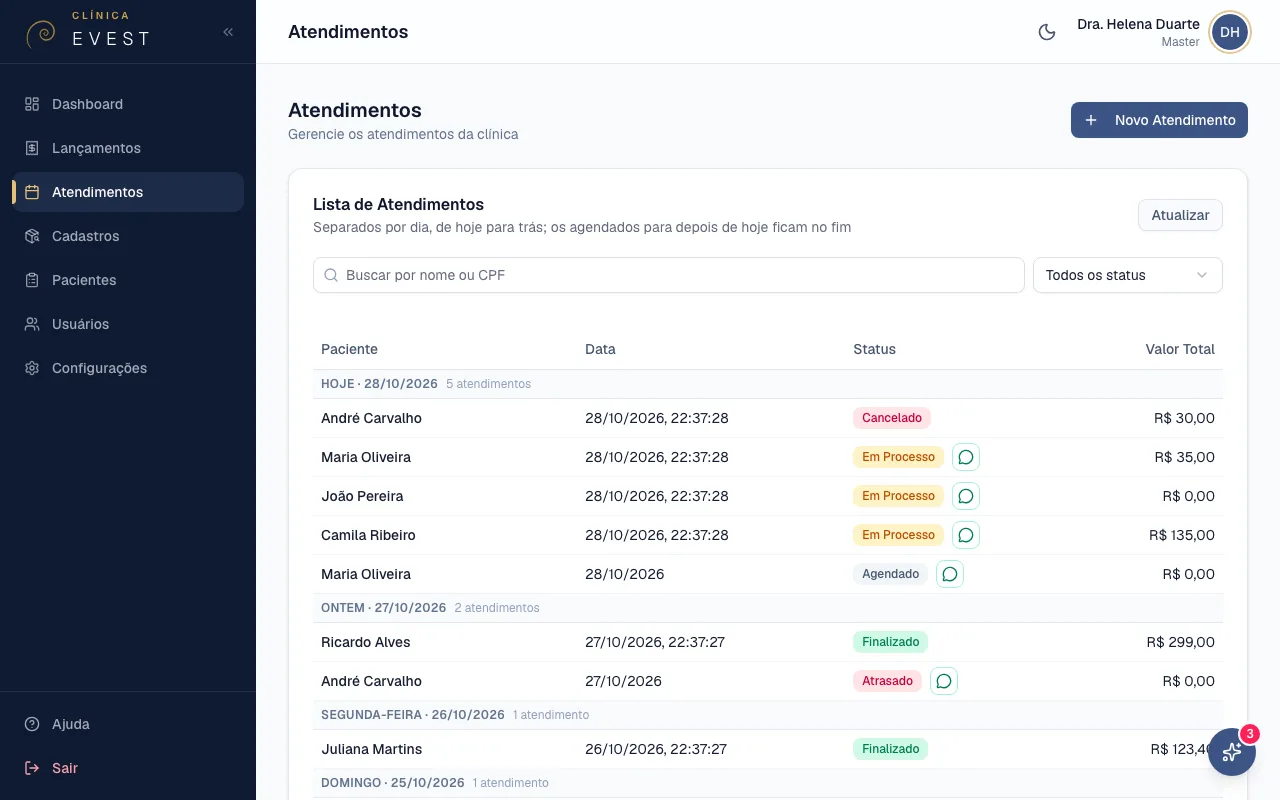
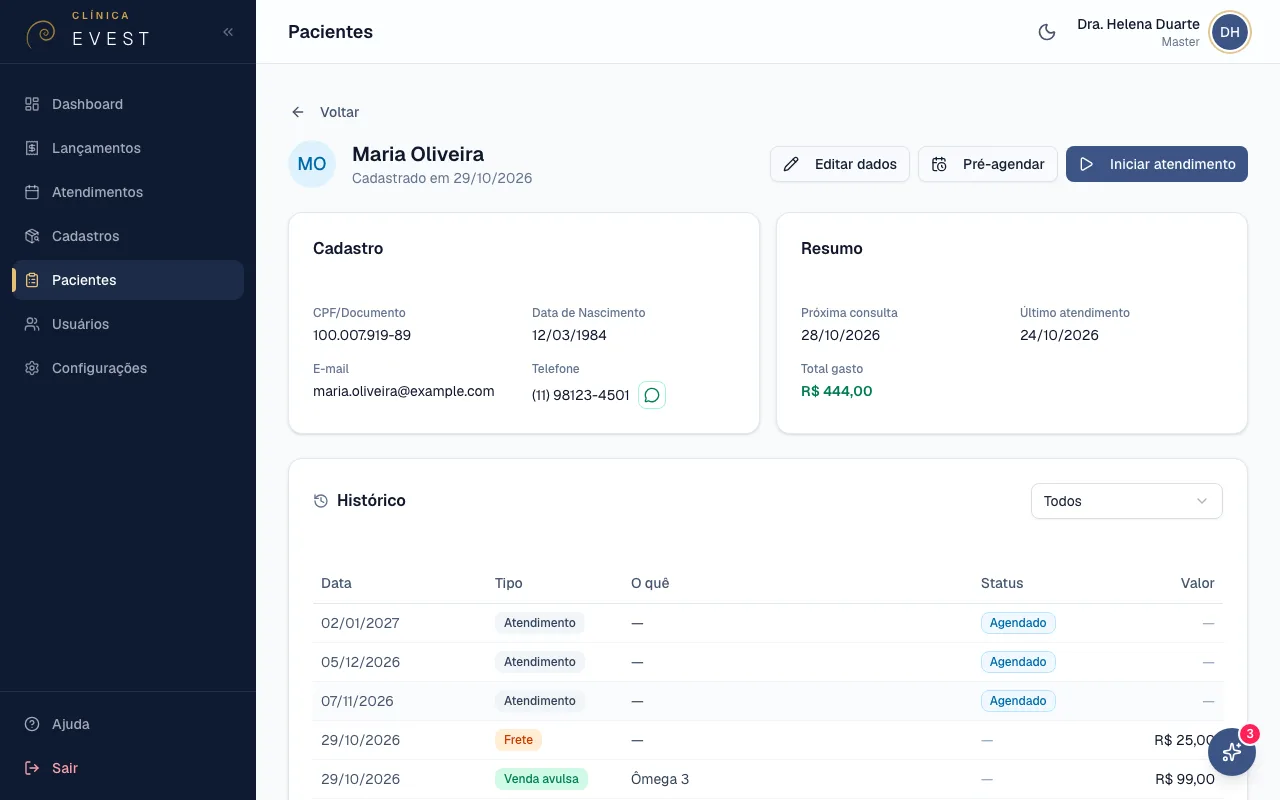

Screenshots use fictional data: no real patient data appears here.
Architecture
Client
Edge
Application
Data
AWS services
Frontend (web-clinic)
Next.js with shadcn/ui and Tailwind. Forms use React Hook Form + Zod, charts use Recharts, and a single Axios client handles automatic session refresh. Each screen only shows up for users holding the matching permission, and the UI works on mobile and in dark mode.
API (clinic-core)
Modular NestJS, one module per domain (patients, plans, appointments, inventory, finances, reminders...). DTOs validated with class-validator, OpenAPI docs, and a Unit of Work for operations spanning several tables: finishing an appointment deducts inventory and books the revenue in a single transaction.
Auth & permissions
Login through AWS Cognito, with tokens verified via JWKS and kept in HTTP-only cookies with silent refresh. Redis handles session caching and login throttling. Permissions are granted per user and per screen rather than by fixed roles.
Infra & delivery
Production runs on an EC2 instance in the clinic's own AWS account: Docker Compose with MySQL, Redis, API, web and Caddy (automatic HTTPS). There are daily backups to S3, SNS alarms and a monitored budget. GitHub Actions CI runs lint, unit tests, e2e against real MySQL/Redis and the build on every PR. I also designed an ECS Fargate + RDS architecture in Terraform for when the clinic outgrows a single box.
Data model
MySQL 8 modeled with TypeORM and versioned through migrations. There are 31 entities, grouped into five domains:
Patients & protocols
PatientPlanPlanDetailPlanDetailTaskPatientPlanPatientBalanceClosureA Plan is a treatment protocol made of steps (PlanDetail), each listing its services. Assigning it to a patient (PatientPlan) generates the follow-up schedule and tracks progress.
Appointments
AppointmentAppointmentItemTaskAn appointment moves through Scheduled → In progress → Finished/Cancelled. Each item is either a service (Task) or a product variation, with decimal quantity and an amount or percent discount.
Catalog & inventory
ProductProductVariationCategoryProductBatchProductInventoryInventoryHistoryPriceHistoryInventory is tracked per batch (ProductBatch), with lot number, expiry date and unit cost. Stock is consumed FEFO: the batch that expires first goes out first.
Finances
TransactionTransactionItemSupplierPurchases, sales, freight, discards and adjustments are typed transactions. A purchase creates batches and a sale consumes them, so inventory and cash always move together.
Platform
UserPermissionUserPermissionAuditLogReminderReminderTypeReminderTagNotificationDispatchClinicSettingAssistantAnswerUsers with fine-grained permissions, an audit trail (who changed what), reminders with types and tags, e-mail notifications and clinic settings.
Modeling decisions
- Money stored as integer cents to avoid floating-point rounding errors in the books.
- Quantities stored as decimals, because a vial can be partially used and the remainder becomes the patient's balance.
- Price history and audit logs in their own tables: changing a price never rewrites past sales.
- RESTRICT deletes and soft deactivation: a product or service that was already used never disappears from history.
Highlights
Protocols & follow-ups
Assigning a plan to a patient generates the follow-up schedule, and overdue visits get flagged.
Expiry-aware inventory
Batches, units of measure, logged discards and alerts for products close to expiring.
PDF receipts
Receipts are rendered server-side with pdfmake and e-mailed to the patient in one click.
AI assistant (Gabi)
Backend rules find what needs attention (follow-ups, expiries, pricing) and the LLM only writes the text. Patients are pseudonymized before any call, for LGPD (Brazil's GDPR) compliance.
Dashboards
Revenue, discounts, best-selling services and upcoming patients, filterable by period.
Help Center
50 in-app tutorials with screenshots. A CI script flags when the help mentions a button that no longer exists.
Stack
Backend
Frontend
Data
Cloud & DevOps
Quality
What I learned
- Writing a spec and plan before any code (docs/specs/<feature>) made conversations with the clinic far more focused.
- Working with real data demands care: a backup before every migration, e2e tests against a real database and deploys only after business hours.
- Software for a small client is still a product: training, a Help Center and release notes are what make the team actually adopt it.
Want to build something like this?
I build custom websites, APIs and systems, from discovery to deployment. Let's talk.
Get in touch